Oberkotter Foundation
  • About
    • About
    • Our Legacy
    • Strategic Plan
    • Leadership
    • What We Believe
    • Contact Us
  • Initiatives
    • Initiatives
    • Science & Innovation
    • Hearing First
    • Starts Hear
    • Scientific Council
  • Grants
  • News & Updates
    • News & Updates
    • Events
Oberkotter Foundation
  • Site
  • Search
  • User

Dreams realized
The Oberkotter Legacy

Close
On This Page
On this Page:
  • A Bright Future Began
  • One Life-Changing Idea
  • A Legacy of Hope, A Future of Possibilities
Generic Content

The Oberkotter Foundation was founded by Paul and Louise Oberkotter in 1985 and has provided more than $500 million to programs throughout the United States in support of its mission.
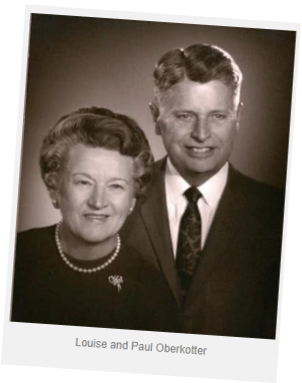
Louise and Paul OberkotterIn 1937, Mildred (Mildie) Oberkotter turned two, and the doctor diagnosed her as profoundly deaf.

Communication options for Mildie were limited in the 1930s. Technology was limited. Hearing aids were not nearly as advanced as they are today. Cochlear implants were a half-century away from being invented. Many families might have braced themselves for a life defined by hardship and limitations. Not Paul and Louise Oberkotter.

Paul and Louise decided that their daughter would learn to communicate through speaking and lip reading. Recognizing the importance of having appropriate support, they sought out hearing specialists, organizations, and other resources. This ignited the spark of an idea. Fifty years later, Paul and Louise Oberkotter established the Oberkotter Foundation to support families and increase access to resources without needing to relocate or send their child away to a specialized school.

“Basically, I had pretty much a normal childhood,” Mildie recalled. “I can’t stress enough how ordinary it all was. That’s important for parents of hard-of-hearing children to know.”
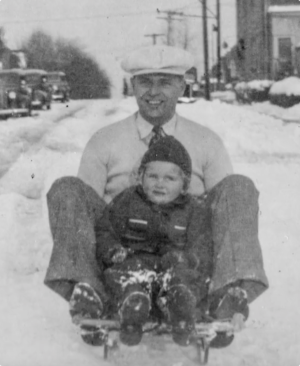
Mildie and Paul sledding when Mildie was a young girl
Register

A Bright Future Began

Growing up, Mildie attended a mainstream school, completely integrated into the classroom along with students with typical hearing. She grew up playing with children in the neighborhood and became a social young woman with a rich, fulfilling life.

She earned a degree in accounting/business administration and began a career in sales in New York City before pivoting to computer programming.

As Mildie’s career was beginning, her father Paul’s career was thriving. He had started at UPS as an assistant, rising through the ranks to serve as president, CEO, and chairman of the board. In 1985, after 60 years at UPS, he was ready to retire—but he envisioned a new chapter. He approached Mildie, who was 50 at the time, with an idea that would change their lives: a charitable foundation.
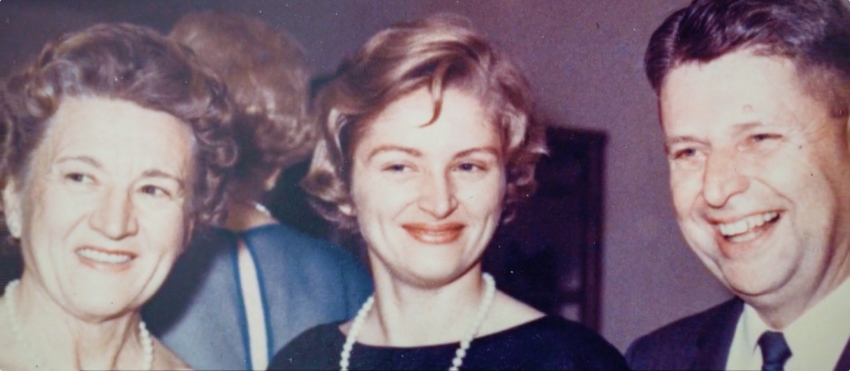
Louise, Mildie, and Paul

One Life-Changing Idea

Immediately, Mildie knew how she wanted to make a difference. Together, she and her parents decided to fund support for children who are deaf so they could learn to listen and talk.

So much had changed since Mildie was diagnosed: the first cochlear implant had been received by a preschooler and hearing aids were on the verge of becoming digital. Newborn hearing screenings were beginning to be implemented across the United States. Yet there were still few programs using Listening and Spoken Language (LSL) strategies and principles to teach babies and young children with hearing loss.

The Oberkotters saw a bright future for children with hearing loss. With earlier identification and the new technology on the horizon, the opportunities had never been greater for excellent LSL outcomes. The Oberkotter Foundation sought to support families by removing barriers and increasing access to this communication outcome.

1980s

Our History
A Legacy of Hope, A Future of Possibilities

GET STARTED

1980s

1985

The Oberkotter Foundation Is Founded

Paul and Louise Oberkotter establish the Oberkotter Foundation in October 1985.

Initial investments focus on philanthropic funding to further medical research for diabetes and Alzheimer’s disease as well as a grant to establish financial aid programs to the Alexander Graham Bell Association to help families of children with hearing loss access services and care.

Advancements in neuroscience and technology continue to accelerate while early hearing screening tools (ABR, OAE) and pediatric cochlear implantation gain traction.

Both the National Institute of Health Consensus Panel and the Joint Commission on Infant Hearing (JCIH) recommend universal newborn hearing screenings.

Contemporary hearing technology continues to evolve, and cochlear implants receive FDA approval for children as young as 2 years old.

The Foundation pivots its funding strategy based on Paul and Louise's daughter, Mildie and her experience growing up deaf.

Anchored by her vision of what’s possible for families, the Foundation adopts a new mission: help children who are deaf or hard of hearing learn to listen and talk.

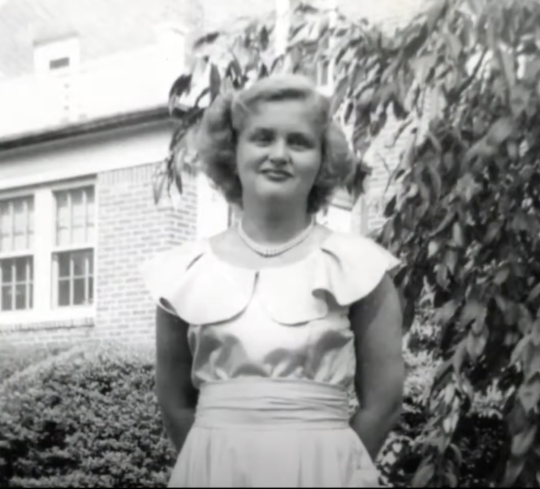
A young Mildred Oberkotter stands in front of a brick structure and green foliage, smiling with her hands behind her back.

With early screening tools and new hearing technology emerging, the Oberkotter Foundation saw a bright future ahead for children with hearing loss.

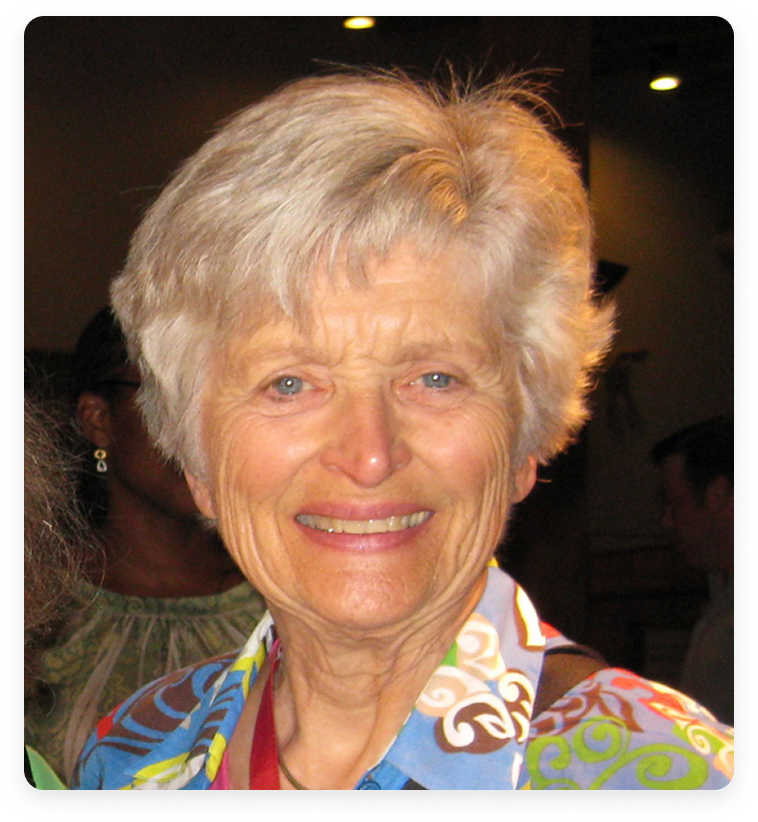
“When the Oberkotter Foundation came along, it was a game changer for deaf oral education and was the only foundation that ever gave such large amounts of money for the education of children [born deaf or hard of hearing] learning to talk...

...And it actually changed the landscape.”

Jean S. Moog Founding Director
The Moog Center for Deaf Education
1994

The Foundation Solidifies its Focus

The Advisory Committee to the Oberkotter Foundation (ACOF) convenes, a pivotal moment in shifting the Foundation’s focus to Oral Deaf Education, which later evolved to Listening and Spoken Language (LSL).

The Oberkotter Foundation begins to help establish schools, laying the groundwork for 25 Listening and Spoken Language schools and programs to be established across the country so families can better access services, transforming how children who are deaf learned to listen and talk.

The Oberkotter Foundation supports professional training in auditory oral deaf education, audiology, and speech pathology.

1998

Dreams Spoken Here

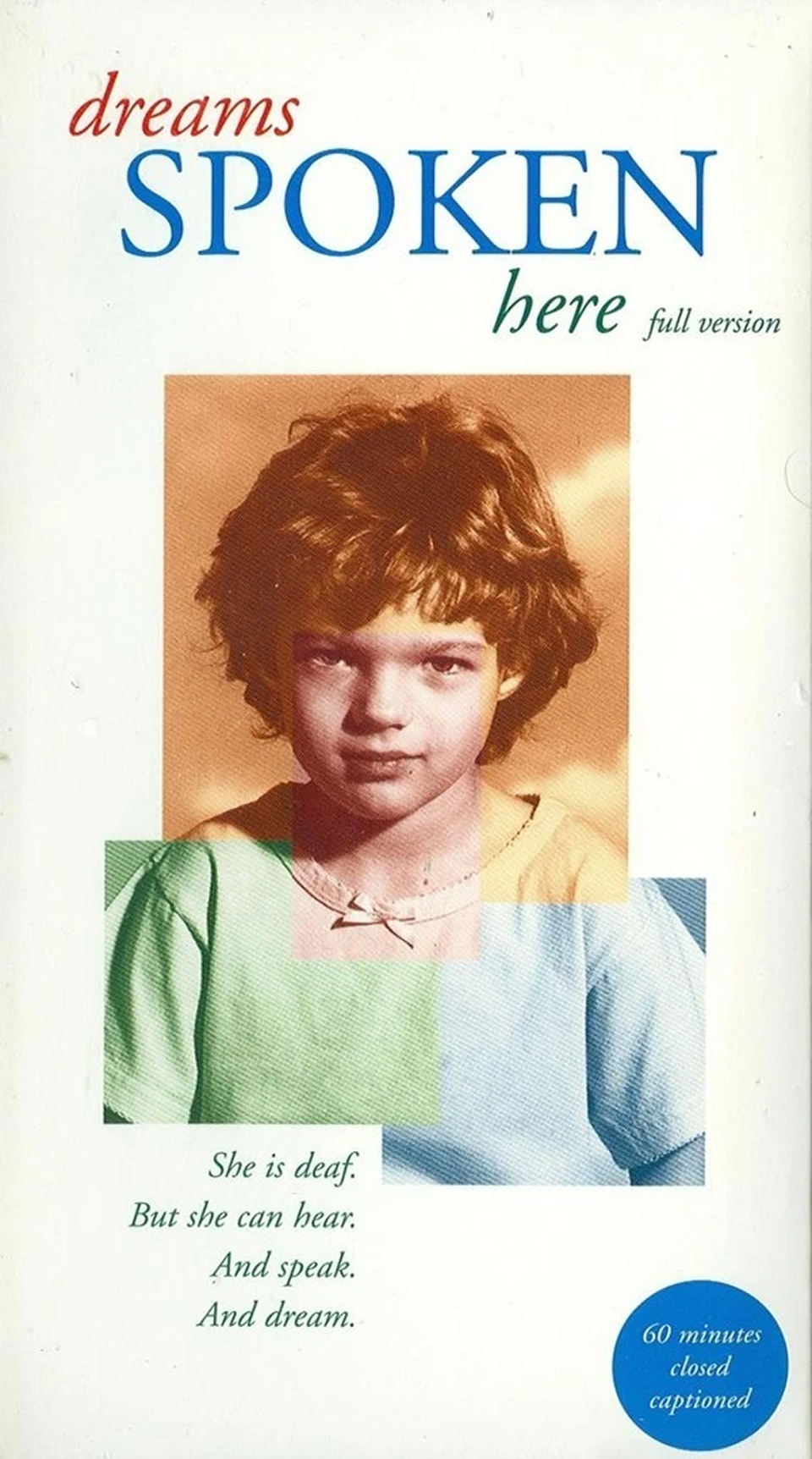
The Oberkotter Foundation produces and distributes Dreams Spoken Here, a campaign with documentary videos to improve awareness of Listening and Spoken Language (LSL) opportunities.

Millions of copies of the videos and information packets circulate to families and professionals, changing expectations about what’s possible for the future.

The first cover art for the Dreams Spoken Here film features the title in scripted text and an image of a child smiling, with a red, green, and blue square overlaid.

Watch: Dreams Spoken Here

A woman cradles a baby in her arms and speaks to it. The baby, who is wearing a hearing device, looks back at the woman. The text “Dreams Spoken Here” appears on the image.

Download Transcript

Hospitals feature Dreams Spoken Here for grand rounds presentations to raise awareness of the newborn hearing screening and listening and spoken language, so that physicians can better support the screenings and encourage urgent follow up for children and their families.

The Newborn and Infant Hearing Screening and Intervention Act of 1999 passes, generating federal funding and support to states to encourage implementation of newborn hearing screenings.

Around the same time, the FDA approves cochlear implants for children as young as 18 months old.

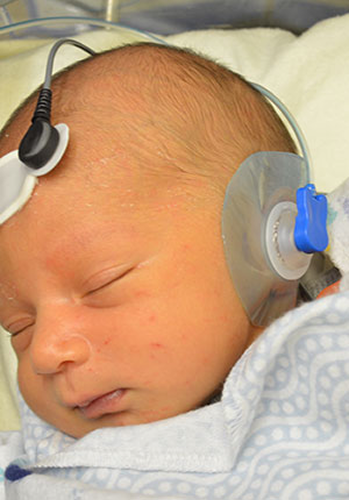
A newborn has two small monitors with connecting wires placed on its forehead and ear as it receives a hearing screening.

The FDA reduces age of implantation to 12 months old in 2000. JCIH establishes 1-3-6 Early Hearing Detection and Intervention Guidelines.

2004

Dreams Made Real

The Oberkotter Foundation produces and shares Dreams Made Real: Into the Mainstream, showing the same children from Dreams Spoken Here five years later and the progress they have made.

Watch: Dreams Made Real

Five children run after one another in a field, smiling. The text “Dreams Made Real” appears on the image.

Download Transcript

The Foundation makes strategic investments in evidence-based programs and interdisciplinary collaboration.

Funding is provided for university programs for Teachers of the Deaf along with professional training programs to equip existing professionals such as First Years and PPCI (Professional Preparation in Cochlear Implantation).

The Oberkotter Foundation opens grant funding opportunities, emphasizing early intervention and LSL and audiology collaboration.

2015

Hearing First Launches

The Foundation launches Hearing First to help create a future in which all children who are deaf or hard of hearing—regardless of their hearing status, zip code, or economic circumstance—have the opportunity to reach their full potential.

The new virtual model expands access to resources, learning, and community for thousands of families and professionals.

The Hearing First logo features a power button icon in an orange circle, with the main text “Hearing First” and subtext “Powering Potential”. Text below the logo reads “An Initiative of the Oberkotter Foundation.

2020s

2021

Starts Hear Campaign Reaches Moms-to-Be

The Starts Hear Awareness Campaign launches to educate, empower, and equip expectant parents about newborn hearing health and early brain development so they are prepared to take immediate action following a failed newborn hearing screening.

The Oberkotter Foundation unveils a new strategic plan to focus on creating scalable and sustainable change in pediatric hearing healthcare, bridging the gaps in care so that every child with hearing loss has the opportunity to develop age-appropriate listening, talking, and literacy skills.

2024

Honoring the Legacy of Mildred Oberkotter

Mildie Oberkotter passes away in May 2024, leaving a legacy of unwavering commitment and visionary influence.

The Foundation launches a redesigned website to communicate the future-facing vision and promise to advance its work with clarity, purpose, and collaboration.

The Oberkotter Foundation logo  - A starburst in an orange and gold gradient followed by the text Oberkotter Foundation.
2025

Scientific Council for Childhood Hearing

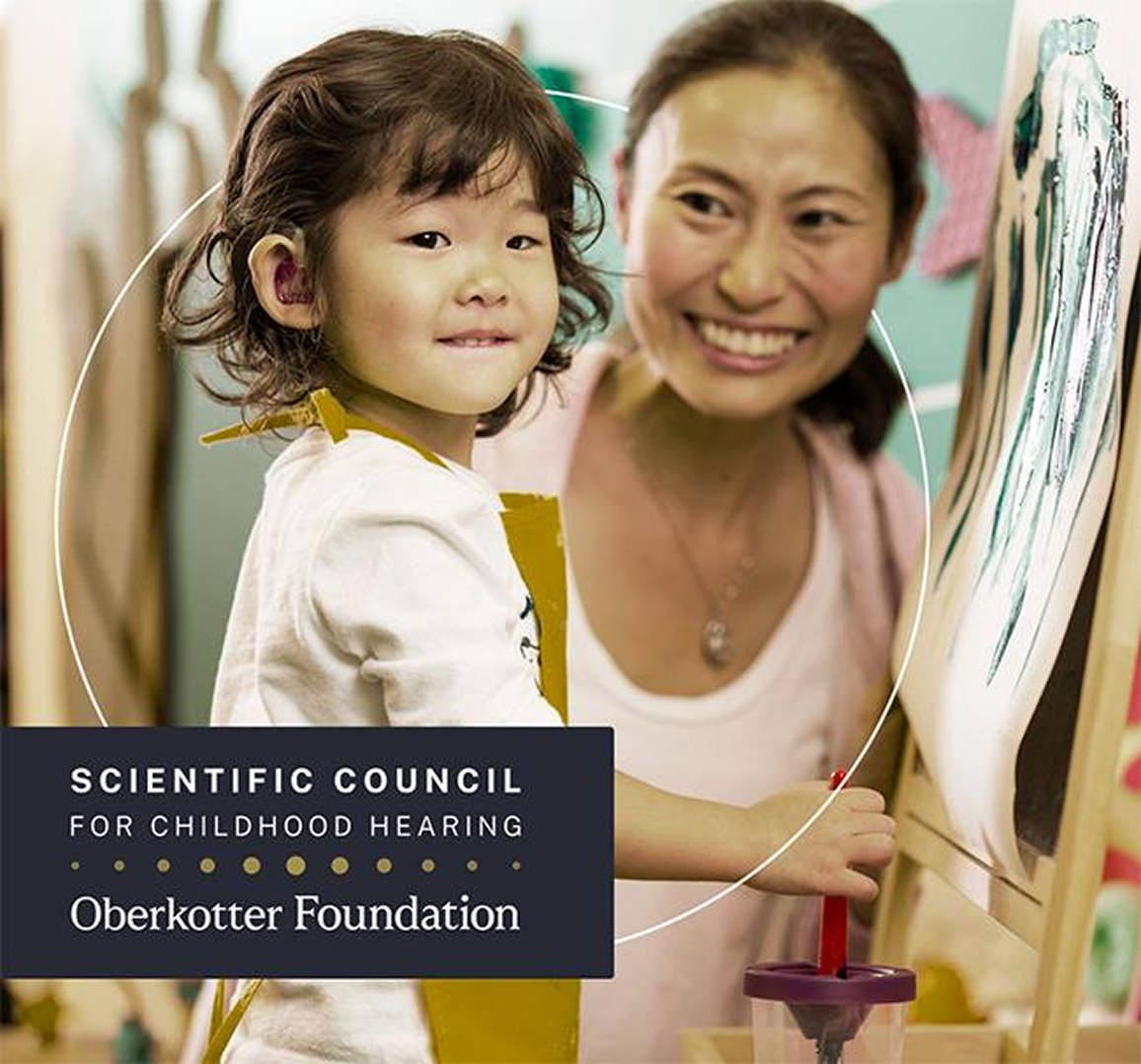
The Foundation launches the Scientific Council for Childhood Hearing, a group dedicated to analyzing the science of listening, language, and literacy for children who are deaf or hard of hearing, as it implements its new strategic plan.

A young girl wearing a hearing device smiles as she stands at an easel, painting. The image has the text “Scientific Council for Childhood Hearing – Oberkotter Foundation” on it.
2025

New Opportunities for Grant Funding

To foster progress and seek innovative approaches that help address barriers to care, the Foundation reopens requests for grant submissions through new funding opportunities. Read more about the Foundation's grants and funding here..

See What’s Ahead
The Legacy Continues

Read more about the Oberkotter Foundation’s recent work and latest efforts to support children who are deaf or hard of hearing.

Explore the Latest
Back to Start 1980s What's Ahead
Back to Start 1980s 1990s 2000s 2010s 2020s What's Ahead
Top of Page
Oberkotter Foundation Logo Celebrating our 40th Anniversary

A Legacy of Hope
A Future of Possibilities

Read More

Stay Connected

Sign up to receive the latest news, ideas, and innovation from the Oberkotter Foundation.

Oberkotter Foundation Logo

Who We Are

About Our Legacy Strategic Plan Leadership Careers

What We Do

Initiatives Grants News & Updates

Get In Touch

123 S. Broad Street
Suite 1500
Philadelphia, PA 19109

info@oberkotterfoundation.org
Terms of Use Legal Privacy Policy
©2026 Oberkotter Foundation. All rights reserved.